Dragging Things
Adding Applications, Opening Files with applications on TabLauncher
About TabLauncher PRO
TabLauncher Pro is a FREE companion for TabLauncher customers.
It is the same TabLauncher, distributed outside the App Store,
so it can do the things a sandboxed app is not allowed to do.
Windows tab
A special tab that lists the windows of every running app,
so you can jump straight to a window instead of hunting for it.
Click one to bring it forward; right-click to minimize or close it.
With Accessibility access granted, Pro raises the exact window
through the system’s Accessibility API — instantly, even when the
window is tabbed away behind another one (Merge All Windows),
or sitting on a different desktop.
A sandboxed app cannot do this, which is why the Windows tab
is no longer offered in the App Store versions.
App icons instead of previews
An option for the Windows tab: each window shows its app’s icon
instead of a live thumbnail. No screen captures at all, so the tab
opens instantly and the screen-recording indicator stays off.
Quit apps from the launcher
Right-click an app’s icon to quit it (or force quit it if it hangs),
or right-click a tab and quit every running app on it at once.
Window Layout (Beta)
An icon that remembers where all your windows are.
Click it once to take a snapshot; click it again whenever things
get messy and every window moves back to its saved place —
position, size and desktop. Right-click it for a new snapshot.
It keeps itself up to date
Pro does not come from the App Store, so it updates itself:
right-click a tab and choose Check for Updates…
To use it, TabLauncher from the Mac App Store
must be installed on your Mac. On first run Pro offers to take over
your existing tabs and settings, so you carry on where you left off —
keep the App Store version installed, but run only one of the two.
The Windows tab asks for Screen Recording (to read window names
and draw the thumbnails) and Accessibility (to move windows around).
TabLauncher points you at the right System Settings pane when it needs them.
Download TabLauncher Pro
Adding the Trash icon
Right click a Tab and select the menu Add Custom / Trash / Trash.
Clicking this Trash Icon will show the trash contents in Finder.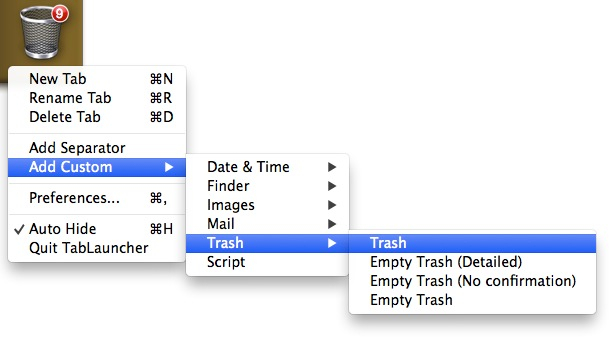
There are some right click options as well.
More options can be added to the menu using AppleScript.
You can also add Icons to empty trash when clicked, instead of showing the trash contents.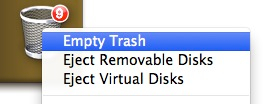
Adding a custom item
In this example we are going to add an Icon to set Finder to show hidden files.
A script for this is already included so simply add it from the menu Add Custom / Finder / Show Hidden Files.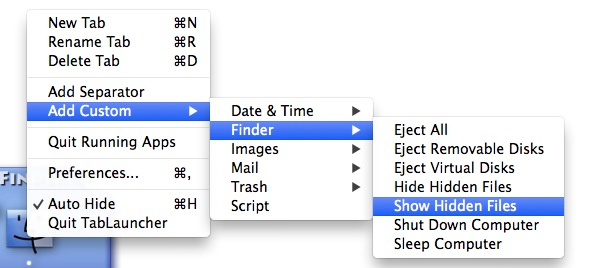
A new Icon will appear, and it’s already functional.
But has the default script icon appearance, which is not very pretty. So let’s add our own personal touch.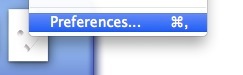
On the preferences menu we can drag in any image or file to use as Icon image, or we can make our own Icon.
In this example we will make an Icon ourselves.
Start by selecting an image from the existing templates, and change it’s color.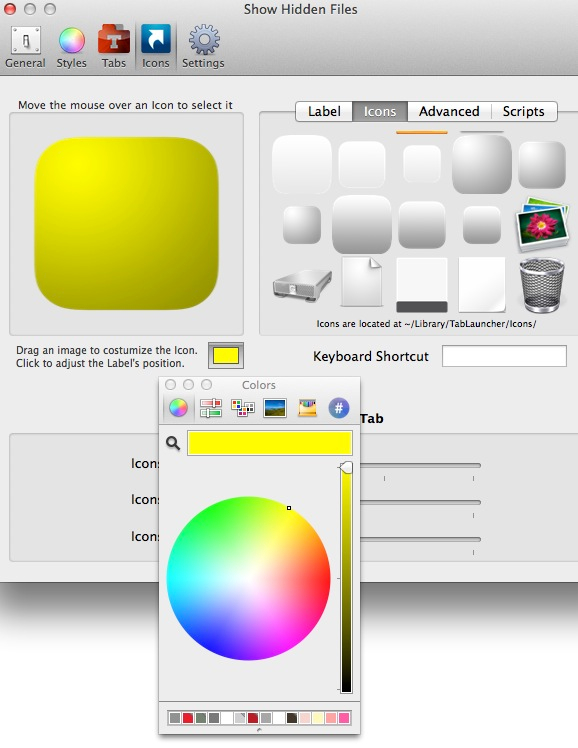
Clicking the button with the smiley will display Apple’s emoticons and symbols.
We’ll use the eyes, since this is an Icon that will show hidden files, seems appropriate.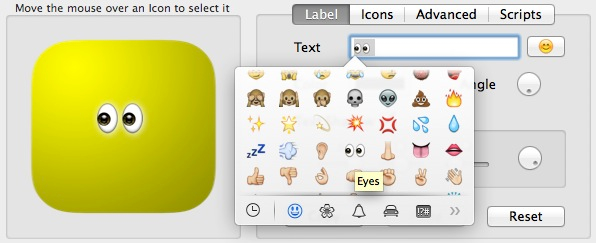
Use the font options to adjust the size.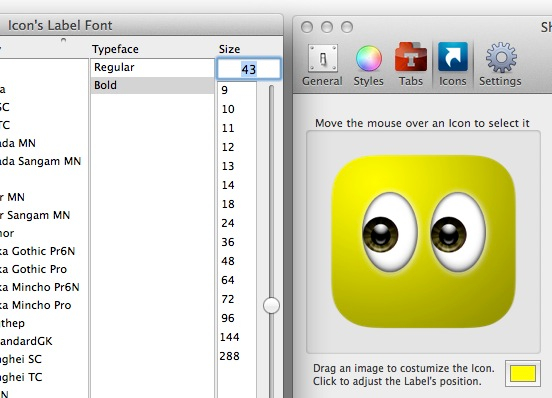
And here’s our new cute Icon to set Finder to show hidden files.
Adding Finder
You can drag the Finder to any tab. It is located here: "/System/Library/CoreServices/Finder.app".
But maybe it's easier to drag the folders you use the most to a tab.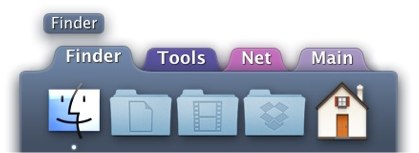
Resizing TabLauncher
TabLauncher will increase its size to accommodate the biggest icons you have on all your tabs.
By shrinking the size of the icons on only one tab, the width will decrease but the hight will maintain.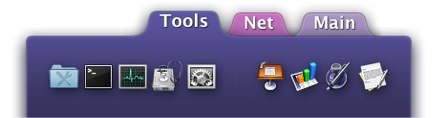
If you shrink the icons on all tabs then the hight will also decrease.
Resizing the tabs
Adjust the Appearance slider on the Tabs preferences menu.
Some styles include a smaller tab.